

Italy is the one European country everybody thinks they know, and for most of its history it did not exist. The peninsula was a Roman heartland, then a patchwork of duchies and republics, then a prize passed between foreign crowns, and only in the lifetime of somebody's great great grandfather did it become a single state. Here is the shape of it.
Rome
The Etruscans built the first cities north of the Tiber, the Greeks the first ones south of it, and a market town between them called Rome swallowed both. By the first century before Christ Rome governed everything from Spain to Syria, and the peninsula itself was the privileged core of that world: the only land whose free inhabitants were all citizens. The roads, the aqueducts, the law and the language that every later Italy would build on were laid down then. So was the habit of calling the whole boot by one name. Augustus divided it into eleven regions and called the sum of them Italia.
A hundred city states
When the western empire fell in the fifth century the peninsula broke into pieces and stayed broken for fourteen hundred years. Lombards held the north, Byzantines the south, the Pope the middle. Out of the wreckage grew something Europe had not seen since Athens: cities that governed themselves. Venice, Genoa, Pisa and Amalfi ruled the sea. Florence, Milan, Siena and Bologna fought each other over every hill. It was in these small, rich, quarrelsome places that the Renaissance happened, that banking was invented, that Dante wrote in Italian instead of Latin and made a language of it.
Three foreign crowns
The city states could not defend themselves against real kingdoms, and from the sixteenth century they did not have to try, because real kingdoms owned them. Spain held Naples, Sicily, Sardinia and Milan for two hundred years, and left behind the courtesy of Don, the baroque, and a taste for ceremony. Austria took the north after Spain. The Bourbons took the south. The Pope kept the middle. Italy, in Metternich's famous sneer, was "a geographical expression". It was meant as an insult and it was, for the moment, true.
The Risorgimento
The nineteenth century answered him. A generation of conspirators, poets and soldiers set out to make the expression a country, and against most expectations they did it. Piedmont under Cavour supplied the diplomacy, Garibaldi the theatre: in 1860 he landed in Sicily with a thousand volunteers, took the island in weeks and the whole south in months, and handed it to the King. The Kingdom of Italy was proclaimed in 1861. Rome, the last piece, fell in 1870, and for the first time since the Caesars the peninsula had one capital. The star that had stood for the idea, the Stellone, went onto the new state's arms.
The land itself
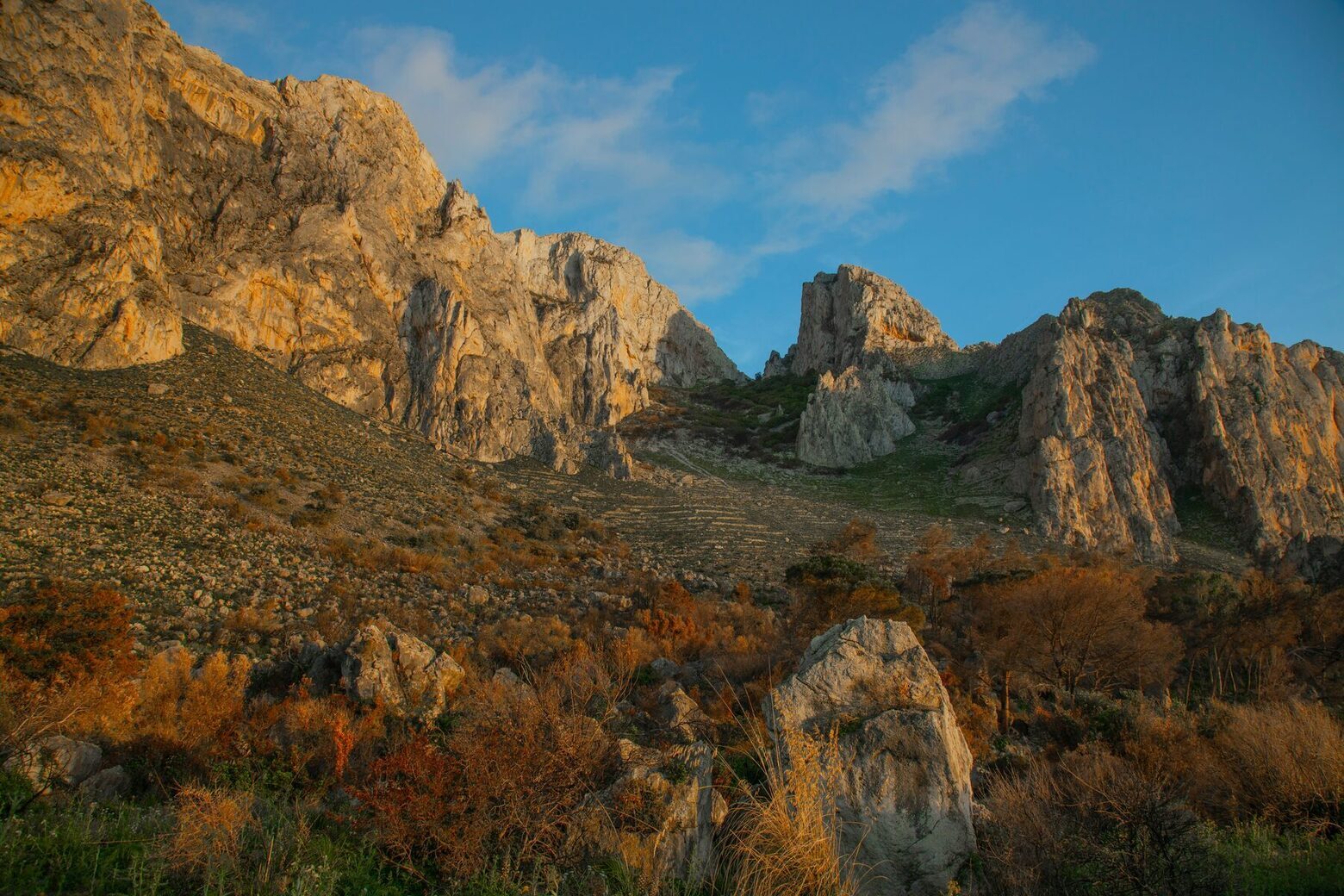
Behind the history is the country, and the country is mostly hills. Vines on the slopes of Piedmont and Tuscany, olive groves that run from Liguria to the toe of Calabria, lemon terraces on the Amalfi coast, and in the far south, on the island of Sicily, the ground our own dedications name, in the hills above the Ionian Sea, north of Taormina, with Etna smoking on the horizon. Sicily was Rome's first province, won in 241 BC, and its grain fed the city. It is as Italian as ground gets.
The end of the titles
The Italy of princes and counts faded across the twentieth century, and in 1948 the new Republic set the seal on it. Its Constitution declared that titles of nobility are no longer recognised, closing the book on the old aristocracy in law as history had already closed it in fact. What remains is the romance of the thing: the Dons and the Donnas of the villages, a courtesy that needed no constitution and lost nothing when the coronets went.